

Search Results forpudong

China’s airport surge: Shanghai Pudong climbs to No. 5 globally
The latest annual ACI global airport traffic rankings are out: Hartsfield–Jackson Atlanta International Airport, Dubai International Airport, Tokyo Haneda Airport, Dallas/Fort Worth International Airport, and Shanghai Pudong International Airport ranked among the global top five. Guangzhou Baiyun International Airport has re-entered the top ten. Shanghai Pudong, for example, rose from No. 10 in 2024 to No. 5, jumping five places in just a year and emerging as the clear fastest riser among the top ten. Notably, last month also saw the release of the 2025 global city rankings by airport passenger traffic. Shanghai, with a combined total of 135 million passengers across Pudong and Hongqiao, entered the global top three for the first time. It also surpassed Tokyo (Haneda + Narita) to become Asia’s busiest aviation city. A similar rebound is evident in Guangzhou. In 2025, Guangzhou Baiyun handled 83.583 million passengers, rising from No. 12 in 2024 to No. 9 and rejoining the global top ten. Overall, the top ten ranking points to a more structural shift: Mature North American markets are seeing slower growth as leading hubs enter a more stable phase, while Chinese airports are accelerating their recovery and moving back onto an upward trajectory. At the same time, Middle Eastern hubs—represented by Istanbul Airport—are reshaping global traffic flows through their expanding transfer networks.
China Eastern Airlines launches Eastern E-Services at Shanghai Pudong International Airport
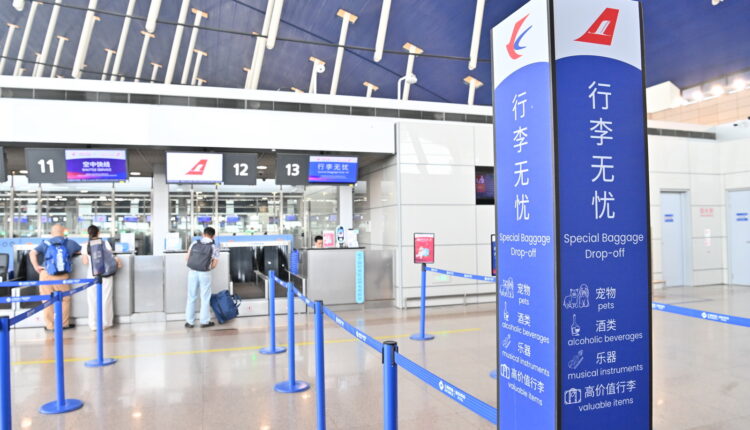
China Eastern Airlines recently launched a new series of travel facilitation services at Shanghai Pudong International Airport. The implementation of the airline’s Eastern E-services aims to improve assistance for international passengers flying into the country, and to boost existing baggage services and transit routes into the Yangtze River delta. Eastern E-Services includes online systems for digital boarding passes, ticket booking, a 24-hour transfer service, health services, declaration at customs and immigration, a city pass, and a digital arrival card. These services not only reduce the airline’s carbon footprint, but they make the entry and exit processes easier for foreign travellers. As soon as you arrive Passengers arriving in China aboard China Eastern Airlines flights via Shanghai Pudong International Airport may obtain electronic boarding passes through the China Eastern Airlines app. This also enables them to enjoy an extensive range of convenient services. China Eastern Airlines also offers an online transit information submission service for foreign visitors eligible for the 24-hour or 144-hour visa-free transit, which significantly reduces the time needed to complete entry procedures. The airline likewise extended the service hours at its domestic check-in counters at Shanghai Pudong International Airport to midnight, ensuring 24/7 availability for domestic check-in services.
SITA revolutionises traveller experience at Shanghai Pudong International Airport
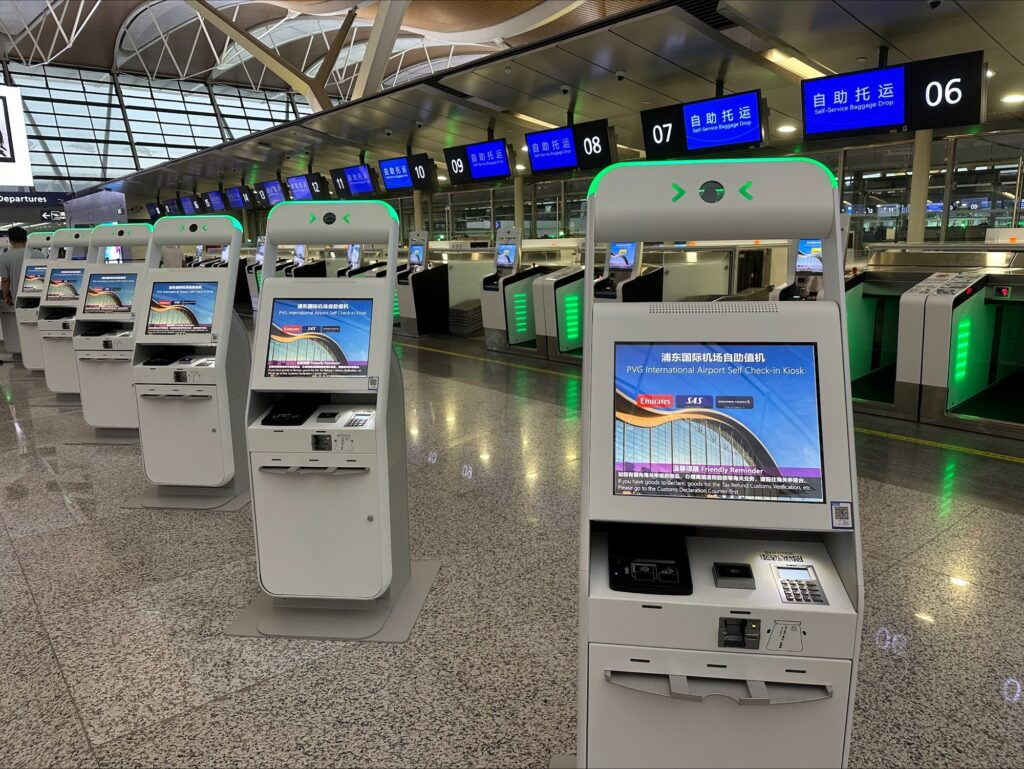
SITA, the leading provider of air transport technology solutions, will be installing its state-of-the-art passenger verification and check-in solutions to Shanghai Pudong International Airport to greatly enhance the experience of travelers through the airport. Through this partnership, SITA will deploy common-use self-service bag drops (SBD) and kiosks for Pudong Airport’s foreign airlines and their passengers, making the journey through the terminal much easier and efficient. Pudong Airport is the busiest international hub in China, with half of its total passenger traffic made up of international travelers, and as more international routes reopen post-pandemic, the number of flights and passengers is expected to rise. With the need for faster and easier operations at the airport, SITA has deployed 52 kiosks and 14 SBDs across the airport, allowing international passengers to independently check in early before counters open. Travelers will avoid long queues and beat congestion, benefiting from a seamless check-in and verification experience. As the next step, SITA will work together with Pudong Airport to help the airport enhance the end-to-end self-services through a low-touch, safe environment, which is also in line with the airport's digital transformation strategy. Sumesh Patel, President, SITA APAC, said, “As air travel booms globally, and airports see a massive surge in travelers, there is an increased need for technology that can speed up the boarding process, reducing delays and traffic for passengers. With this collaboration, Pudong Airport gains SITA’s leading self-service solutions, tailored to bring a streamlined journey to international travelers at Pudong Airport. As always, we are committed to optimizing the global passenger experience with exceptional technology-driven solutions.”

Mandarin Oriental Pudong, Shanghai invites everyone to discover stunning art
Mandarin Oriental Pudong, Shanghai invites travellers from around the world to “Evergreen Spirit”, an art exhibition by contemporary Chinese artist Sean Wu. Celebrating the hotel’s 10th Anniversary, the exhibition gives guests the opportunity to rediscover all that is beautiful about the orient while paying tribute to the hotel’s past decade in China’s cosmopolitan metropolis. The hotel has also created some tempting offers and accommodation packages. Home to an impressive collection of 4,000 pieces of art, Mandarin Oriental Pudong, Shanghai, located on the east banks of Huangpu River, is a must-visit destination for art connoisseurs. Ten years have passed since the opening of this riverside gallery, and there’s no better way to recognise its milestone achievement than infusing a new artistic energy into the hotel. Collaborating with artist Sean Wu, the hotel is hosting the unique “Evergreen Spirit” exhibition until 30 June. Art installations inspired by bamboo and upholding the concept of sustainability, to which Mandarin Oriental is actively committed, are placed throughout the property. “Bamboo represents the evergreen and oriental spirit. Understated, elegant and artistic: these are my first impressions of Mandarin Oriental Pudong, Shanghai, which translate into oriental beauty and aesthetics. I’m greatly honoured to be invited as part of the celebration of the hotel’s 10th Anniversary,” says Sean Wu. He continues, “The past three years have been challenging but our passion for travel, lifestyle and good food has never stopped. As China welcomes world travellers again, I would like to join hands with Mandarin Oriental Pudong, Shanghai to invite everyone to rediscover oriental beauty.” All artworks are made from recycled green glass bottles, which are ground into fine particles then combined with natural resin. Through this collaboration, the hotel hopes to inspire people to take action towards a more sustainable future. A celebration party took place on 25th April to commemorate the opening of Mandarin Oriental Pudong, Shanghai 10 years ago and to mark the start of “Evergreen Spirit”. During this two-month celebration, guests can look afresh at oriental beauty and charm while also experiencing tempting offers inspired by the exhibition. Culinary delight Drawing inspiration from “Evergreen Spirit”, the hotel’s Head Pastry Chef Marx Ma and his talented team have crafted an Evergreen Afternoon Tea, which can be enjoyed at the hotel’s iconic Riviera Lounge for RMB688 plus 15% for two people to share. Not to be missed are Matcha Framboise Profiterole and Pistachio Zen Garden. Spa and wellness Known as one of the best spas in the city, The Spa at Mandarin Oriental Pudong, Shanghai proudly presents its Oriental Bamboo Massage. The treatment helps increase blood circulation and relieve muscle tension using specialised massage techniques and warm bamboo sticks. A 90-minute experience costs RMB1,380 plus 15% per person. 10th Anniversary limited edition giveaway Also designed by Sean Wu, two unique giveaways are available for retail: a folding book lamp and a bamboo handbag, incorporating oriental bamboo elements and minimalistic design inspired by the art installations. Two exclusive accommodation packages The Evergreen Bamboo package, priced from RMB2,100 per night, includes: one night’s stay in a Mandarin River View Room with breakfast for two Evergreen Afternoon Tea for two 10th Anniversary limited edition giveaway – bamboo handbag. The Oriental Spirit package, priced from RMB3,800 per night, includes: one night’s stay in an Executive Suite with club access for two 90-minute Oriental Bamboo Massage for one 90-minute Oriental Essence Massage for one 10th Anniversary limited edition giveaway – folding book lamp. The offers are available on the hotel’s website until 25 June on a first-come, first-served basis.

Etihad Airways expands in China despite ongoing Middle East turmoil
Etihad Airways recently announced that, starting in October 2026, it will gradually launch services to five major destinations in mainland China—Shanghai Pudong, Chengdu, Hangzhou, Shenzhen, and Guangzhou. Together with its existing daily service to Beijing, its network in mainland China will expand to six destinations with a total of 35 weekly direct flights. This expansion is striking given the continued instability across the broader Middle East. Amid ongoing tensions involving Iran, aviation operations in the region have remained highly volatile. Some routes have been forced to adjust, detours have increased, and capacity deployment has become more frequent, disrupting the stability the industry long relied on. Against a backdrop of still-limited demand visibility, Etihad’s decision to continue expanding its network gives its China strategy a distinctly counter-cyclical character. Notably, on April 12, Abu Dhabi Crown Prince Khaled arrived in Beijing for an official visit to China. In this context, Etihad’s decision to move early on five new Chinese destinations can be seen both as a long-term bet on the Chinese market and as an effort to secure a first-mover advantage before the regional competitive landscape fully stabilizes. Read English Version

Middle East carriers double down on China as Iran war threatens hub stability
Representative Image: Tourist enjoying the modern city of Shanghai, China While conflict-driven airspace closures threatened to ground the long-haul ambitions of Middle East carriers, the industry is finding its second wind in the mainland China market. By deepening joint ventures and flooding new gateways with capacity, the Gulf’s 'Big Three' are transforming China from a tactical destination into the primary anchor of their post-war recovery strategy. That matters because the conflict did more than create short-term operational disruption. Airlines were avoiding large parts of Middle East airspace after the escalation, with carriers rerouting around restricted zones following military action and missile exchanges. The war is reshaping global aviation by weakening, at least temporarily, the seamless Gulf hub model that airlines such as Emirates, Etihad and Qatar Airways spent years building. Against that backdrop, Etihad has made the clearest statement of intent. On April 13, 2026, the Abu Dhabi-based carrier announced five new mainland China routes and 28 additional weekly flights, taking its mainland China operation to 35 weekly services across six gateways. The expansion includes Shanghai Pudong from October 1, 2026, followed by Guangzhou, Hangzhou, Shenzhen and Chengdu in March 2027, alongside its existing Beijing Daxing service. Etihad said the move supports trade, tourism and cargo flows, while also deepening its joint venture strategy with China Eastern Airlines. The significance of that announcement goes beyond capacity. In Etihad’s own wording, China is “a strategically important market” and “a key pillar” of network growth, underlining that the market is being treated as a structural priority rather than a tactical opportunity. For Gulf carriers managing geopolitical volatility closer to home, that distinction matters. China offers not just volume, but longer-term certainty in passenger, cargo and commercial demand. Emirates is following a similar path, though with a broader network architecture. The Dubai-based airline expanded its mainland China footprint in 2025 by adding Shenzhen and Hangzhou to complement Beijing, Shanghai and Guangzhou. In February 2026, it further widened access through an interline deal with Loong Air, giving customers access to 22 additional points across China via Hangzhou, Shenzhen and Hong Kong. The emphasis is not only on nonstop traffic, but on building a larger China ecosystem that strengthens Dubai’s role as a connecting hub for corporate, leisure and cargo flows. Qatar Airways has leaned more heavily on partnerships and bilateral alignment, but the strategic direction is similar. Its cooperation with China Southern Airlines has expanded under a memorandum of understanding covering codeshare, cargo and loyalty cooperation, while later network growth included stronger Beijing Daxing–Doha connectivity and wider beyond-Doha access into Africa, Europe and the Middle East. That suggests Qatar is also positioning itself to capture more Chinese traffic through hub connectivity, even if its China push is less route-led than Etihad’s. The massive network expansion by Etihad, Emirates, and Qatar Airways signals a fundamental shift in the global aviation landscape. While the Iran war exposed the fragility of the traditional "seamless hub" model, it also acted as a catalyst for strategic maturity. By aggressively anchoring themselves in the Chinese market, Gulf carriers are moving beyond tactical rerouting to build a more resilient, diversified ecosystem. Ultimately, these moves suggest that in an era of heightened geopolitical volatility, the path to long-term stability for the Middle East’s aviation titans no longer runs solely through the center of the map—it points decisively East.
China–France routes are decentralizing
Chinese cities like Xiamen, Nanjing, Chongqing and Xi’an have successively launched direct flights to Paris. At the same time, the Shanghai–Marseille route is ramping up rapidly. A new trend is emerging: China–France routes are no longer centered solely on Paris. For a long time, Paris Charles de Gaulle Airport handled almost all air connectivity between the two countries. High-frequency flights linking Beijing, Shanghai and Guangzhou with Paris formed the backbone of the market. But this “single-hub” structure is beginning to shift. Following the launch of the Shanghai Pudong–Marseille route by Shanghai Airlines, a subsidiary of China Eastern Airlines, in 2024, new routes to cities such as Lyon may also be on the horizon. According to the latest data from VariFlight, Chinese carriers now account for 77.02% of capacity on China–France routes, compared with just 22.98% for Air France. Six Chinese airlines—including China Eastern Airlines, Air China and China Southern Airlines—have taken a leading position through multi-city expansion. China Eastern and Air China each hold a 29.83% share, jointly ranking first. This marks a clear shift: in the French market, Chinese airlines are no longer just filling gaps—they are taking the lead. Paris remains the dominant hub. However, as traffic from China’s tier-one and key tier-two cities continues to grow, its capacity is nearing saturation. Growth is now seeking new outlets. In the first half of 2025, six routes from major hubs—Shanghai, Beijing, Hong Kong, Taipei and Guangzhou—to France carried 969,400 passengers, up 6.63% year-on-year. Among them, Shanghai grew by 14.5%, Hong Kong by 1.3%, Taipei by 2.9%, and Guangzhou by 29.4%, while Beijing declined by 6.4%. Meanwhile, five routes from secondary hubs—Xiamen, Shenzhen, Chongqing, Xi’an and Chengdu—carried 102,000 passengers in the first half, surging 79.7% year-on-year, with an average load factor of 83.8%. The Shanghai–Marseille route has reached 150 round-trip flights, nearly matching Xiamen–Paris (156 flights) and surpassing Shenzhen–Paris in frequency. Read English version

No Event found matching your search.
Return To Home