

Search Results forinsight

Arival 360 Valencia opens with insights on travel’s future
Global leaders in the experiences sector convened in Valencia for the opening day of Arival 360 Valencia 2026, a premier conference for tours, activities, and attractions. The event, attended by thousands from over 70 countries, highlighted the transformative impact of AI, social media, and evolving traveller expectations on the industry. Key discussions focused on the decline of traditional search engines, with AI and social platforms like YouTube becoming crucial for customer acquisition. Bruce Rosard and Lori Timony emphasised the need for operators to diversify across video and AI-powered platforms to remain visible. Kristin Dorsett from Viator revealed that despite inflation, travel intent remains robust, particularly for experiences under $100. Viator's focus on fresh reviews and high-quality content is reshaping how experiences are ranked and discovered. Multi-day tours emerged as a significant growth area, with average order values exceeding $3,000. Industry experts, including Natasha Lawrence and Josh Carr, noted the importance of storytelling and sophisticated pricing to capture this market. Pernod Ricard showcased its success in spirits tourism, transforming brand homes into cultural destinations. Laura Sileo highlighted how these sites blend gastronomy and heritage to attract 1.5 million visitors annually. Despite the rise of direct bookings, Peter Muttitt stressed that Online Travel Agencies (OTAs) remain vital for reaching new customers. Success on OTAs requires compelling imagery and concise, mobile-friendly descriptions. The day concluded with OCTO unveiling its open API standard, which is rapidly becoming essential for the industry. With over 89 members, OCTO is streamlining integration processes, promising faster market entry and reduced resource expenditure This story was selected and published by a human editor, with content adapted from original press material using AI tools. Spot an error? Report it here.

JLL releases Q1 2026 Singapore real estate insights
Jones Lang LaSalle (JLL) has unveiled its latest "Singapore Market Dynamics" report, offering a comprehensive analysis of the country's real estate performance in the first quarter of 2026. The report, released by JLL's Research & Consultancy division, provides valuable insights into the office, residential, industrial, retail, and hotel sectors. The report is accessible online, allowing stakeholders to delve into detailed sector-specific analyses. Each sector report is designed to equip investors, developers, and industry professionals with the necessary data to make informed decisions in Singapore's dynamic real estate market. Dr. Chua Yang Liang, Head of Research & Advisory for Southeast Asia at JLL, emphasised the importance of these insights, stating, "We trust you'll find the insights valuable." The reports are available for download on JLL's website, providing easy access to the latest market trends and data. The release of these reports is particularly timely as Singapore's real estate market continues to evolve amidst global economic shifts. By offering detailed sector analyses, JLL aims to support strategic planning and investment decisions in the region. Looking ahead, JLL's ongoing research efforts will continue to shed light on emerging trends and challenges within Singapore's real estate landscape, ensuring that industry players remain well-informed and prepared for future developments This story was selected and published by a human editor, with content adapted from original press material using AI tools. Spot an error? Report it here.

ATIA event reveals vital insights for travel industry
The Australian Travel Industry Association (ATIA) hosted its Beyond Borders on the Road event in Sydney, drawing 50 travel professionals for a comprehensive session on compliance, advocacy, and marketing. Held at Cover-More’s North Sydney office and sponsored by TravelPay, the event provided crucial updates and insights for the travel sector amidst ongoing challenges. Attendees received updates from Qatar Airways regarding operations in the Middle East conflict, and ATIA CEO Dean Long shared proprietary consumer sentiment research. Notably, ATIA's advocacy efforts saved accredited members significant costs, with a reported $14,000 in setup costs and $8,000 annually in ongoing fees. Nina Hedges, ATIA's Director of Compliance, emphasised the importance of accreditation by comparing it to tuna, stating, "It’s what ATIA rejects that makes ATIA accredited businesses the best." The event also featured a marketing masterclass by Nicole O’Sullivan and Chris Fundell, focusing on personal branding and social media strategies. Participants left with practical worksheets to implement these strategies in their businesses. Dean Long highlighted the unexpected enjoyment attendees found in the session, stating, “The most common piece of feedback we got was that people didn’t expect to have so much fun. Compliance. Accreditation. Advocacy. Public policy. These are not words that make people rush to register for an event.” The Beyond Borders series will continue in Brisbane on 20 May, Adelaide on 20 July, and Perth on 22 July, culminating in the Beyond Borders Travel Summit on 9 October in Melbourne This story was selected and published by a human editor, with content adapted from original press material using AI tools. Spot an error? Report it here.

Insight Slices | “Eastward Surge: The Boundless Journey of China Business Travel” Annual Report
Representative Image Eastward Surge: The Boundless Journey of China Business Travel offers a panoramic, multi-dimensional analysis beyond traditional perspectives. It traces China’s business travel evolution from "ticketing agent" to "digital intelligence management," while focusing on enterprise transformation, traveler experience, TMC upgrades, resource provider strategies, tech innovations, and ESG implementation. From travel managers’ budget control to employees’ trip experience, from airline/hotel integration to payment process innovation – it presents an interconnected, living business travel ecosystem. 2. Insight Slices – Core Summary Macro Outlook: From "Recovery" to "Reconstruction" As of early 2026, China’s business travel market has fully exited the post-pandemic repair phase and entered a "structural reconstruction" period of high-quality development. Drawing on five years of GBTA macro data and deep local research, the report finds that despite global headwinds (geopolitics, inflation), China’s business travel market shows strong resilience and vitality. Unlike the steady "service-driven" evolution of Western markets, China’s dual role as the world’s manufacturing hub and a unified domestic market creates a unique "high-physical-intensity" pattern – requiring much higher business mobility per unit GDP growth than mature economies. China is no longer a follower of Western models; it is forging its own path: land-transport-led, mobile-first, and finance-business integrated. Market Structure: The Hidden "Dumbbell" – Underestimated Ground Travel A key finding: air and hotel combined account for only ~56% of total business travel spend in China, while ground transportation (rail + ride-hailing) makes up a striking 44%. This challenges the conventional focus on flights and hotels, revealing a high-frequency, fast-connection ecosystem powered by the world’s largest high-speed rail network and mobility platforms. Domestic travel dominates; cross-border trips are air-centric with lower hotel share, reflecting early-stage "going global" patterns. Future travel management must step out of the "air+hotel comfort zone" and drive efficiency & compliance from fragmented, high-frequency, hard-to-control rail and ride-hailing. Digital Transformation: Killing Reimbursement, Rebuilding Trust Technology is reshaping business travel processes at unprecedented speed. Driven by fully digital e-invoices (fapiao) and corporate virtual account payments, the 30-year pain point of "personal advance + expense claim" is ending. The shift to "corporate direct pay + automated accounting" is irreversible – it frees finance and employees, and more importantly, turns travel data from lagging financial records into real-time business intelligence. Meanwhile, generative AI agents are moving interaction from complex GUIs to natural language (LUI), ushering in an "intelligent secretary" era. Ecosystem Evolution: Back to Value Roles across the value chain are being redefined. For enterprises: Focus shifts from cost-cutting to value creation, using dynamic policies and hybrid payments to balance compliance and employee experience. For TMCs: Moving away from capital-heavy models is the new baseline. TMCs must shed quasi-financial roles, adopt supply chain finance, and return to professional services & tech connectivity. Meanwhile, self-built TMC platforms by mega-enterprises will reshape competition. For suppliers: Airlines and hotels accelerate DTC strategies to reclaim channel sovereignty; ground transport providers solve invoicing pain points through a "compliant unified network," becoming new corporate traffic gateways. Future Outlook: Pragmatic Long-termism Over the next five years, China’s business travel market will embrace pragmatic long-termism over flashy concepts. ESG is no longer a slogan but a finance-driven reality – NEV ride-hailing and paperless reimbursement are the first green travel scenarios to scale. All stakeholders should break silos and build connections: enterprises need travel ROI thinking; TMCs must build full-scenario data governance moats; tech providers should safeguard data sovereignty and security. In this trillion-yuan market, whoever first integrates cash flow, invoice flow, and data flow will define the next decade of China business travel. 3. Methodology C-end: Online survey of 1,305 business travelers across mainland China and Hong Kong. B-end: Surveys with 48 corporate travel managers, 93 TMC/ToB service providers, 37 resource suppliers (airlines, hotels, mobility). Expert interviews: One-on-one with 19 senior executives from industry leaders (TMCs, hotel groups, airlines, mobility platforms, tech providers). 4. Lead Authors - Zhanfu Yu: Senior Independent Consultant, former Roland Berger Global Partner - Charlie Li : Founder & CEO of TravelDaily, Director of CTBT Service Dept., CATS - Jason Li: Data analyst & industry observer, expert at CAAC Civil Aviation Think Tank Report Access Full report (early-bird pricing until April 15): English version: USD 1,000 (regular USD 1,200) 👉 [Click to Pre-order] Partnership & Collaboration We welcome joint research, case inclusion, and thematic co-creation (going global, AI, employee experience). Partner types: TMCs, hotel groups, airlines/mobility, payment platforms, travel tech providers, and supply chain players. Contact: [email protected] Read English version

Trip.com earnings insight: OTA giant recasting itself amid regulatory and AI crosscurrents
Before the regulatory dust settles, the market finds it difficult to extrapolate any single quarter of steady growth into a conclusion that risks have been resolved. Investigation outcomes, potential remedial measures, implications for commercial terms with accommodation suppliers, and even possible management changes all remain subject to further adjustments. In this sense, the company’s latest earnings should still be read as being within an “event window.” Compared with recent earnings releases and conference calls, the most striking shift this time lies neither in the numbers nor guidance, but in the unprecedented prominence given to “social responsibility”. The company has clearly framed its future investment priorities around three key areas: inbound tourism, social responsibility initiatives, and AI innovation —an unusual ordering and emphasis in the context of global OTAs and tech companies. Based on historical precedent in antitrust cases involving major platforms by China’s State Administration for Market Regulation (SAMR), investigations are typically initiated on the basis of established factual foundations. If long-standing market concerns about the so-called “special” or “golden” hotel clauses do indeed involve exclusivity or minimum-price constraints, the platform could face pressure to rebalance commission negotiations as contracts are renewed and terms restructured. More noteworthy, however, is that the company did not center its narrative on “clarifying the definition and impact of monopoly behaviors.” Instead, it chose to bind its long-term growth strategy (especially in inbound tourism) to social responsibility, positioning this alignment as both a proactive response and a form of risk buffering. This signals a strategic posture that treats regulation not as short-term noise but as a framework within which the company seeks to demonstrate alignment with broader policy priorities. As AI reshapes the consumer entry point, differentiation among global OTAs is increasingly being forced back to a fundamental question: the nature of commissions. At their core, hotel commissions charged by OTAs consist of two components: traffic acquisition and operational enablement on the one hand, and fulfillment-related system and technology services on the other. If AI meaningfully disintermediates traffic acquisition, the inevitable question becomes: what is the residual value of fulfillment alone? Booking.com offers a useful reference point. Its approach has been to demonstrate, through extreme operational efficiency and scale, that even if the premium attached to “traffic operations” were to compress — or disappear altogether — profitability could still be sustained on the strength of fulfillment capabilities, potentially at a 5% take rate (a directional illustration rather than a numerical forecast). Trip.com’s response, by contrast, appears more defensive in structure: rather than accepting a supplier-driven separation of “traffic value” and “fulfillment value” into two distinct line items, it seeks to elevate fulfillment itself into a trust-based mechanism, one that makes such unbundling structurally harder to enforce.
ABTA’s COVID-19 insights featured in new report
The Association of British Travel Agents (ABTA) has shared its expert evidence with the COVID-19 Inquiry, which is now featured in a newly published report. The report, released on 16 February 2026, underscores the profound impact the pandemic had on the travel industry, which ABTA claims was affected "like no other" sector. ABTA participated in a roundtable discussion as part of its engagement with the inquiry, aiming to shed light on how pandemic measures affected travel businesses. The association acknowledged the priority of protecting public health but criticised the lack of consideration for the operational realities of the travel industry. Financial support was another focal point, with ABTA noting that travel businesses struggled to utilise furlough schemes due to the need to manage cancellations. The association's lobbying efforts were crucial in securing grant support for travel agents, although other sectors, such as coach and tour operators, received no national support. Mark Tanzer, Chief Executive of ABTA, stated, “The travel industry felt the impact of the COVID-19 pandemic like no other sector. When travel shut down, unlike most other businesses, travel companies couldn’t pivot—no international travel meant no revenue.” He emphasised the importance of the inquiry hearing from the industry to ensure future policy responses balance public health with business needs. The report also acknowledges the role of Refund Credit Notes, an initiative by ABTA that gained support from the Civil Aviation Authority and the Government, helping to stabilise travel businesses and reassure consumers financially. As the industry continues to recover, ABTA's insights aim to inform more balanced policy-making in potential future crises This story was selected and published by a human editor, with content adapted from original press material using AI tools. Spot an error? Report it here.
Bhutan launches Tashel Melong for tourism insights
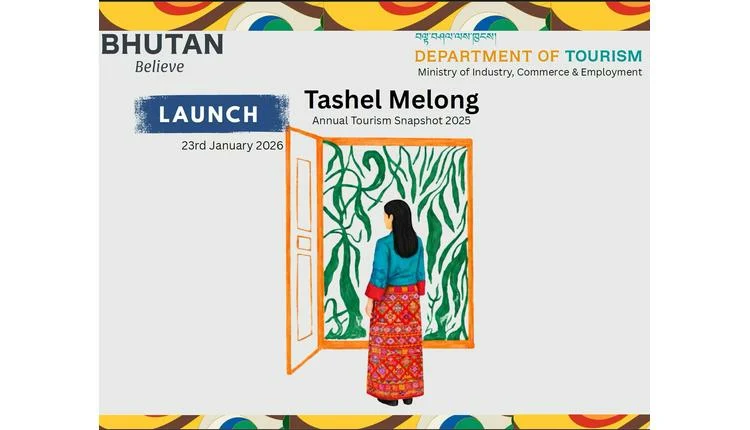
The Department of Tourism of Bhutan has unveiled Tashel Melong, an annual publication aimed at assessing and reimagining the country's tourism sector. This initiative, under the Ministry of Industry, Commerce, and Employment, seeks to provide insights into the sector's performance and strategic activities, positioning Bhutan as a high-value, regenerative tourism destination. Tashel Melong, meaning "tourism mirror," reflects the achievements and challenges within Bhutan's tourism industry, supporting evidence-based decisions for sustainable growth. The publication aligns with Bhutan's national development priorities, such as the 21st Century Economic Roadmap and the Bhutan Integrated Tourism Masterplan 2025–2034. These frameworks aim for tourism to contribute 10–15% to the national GDP by 2050, in harmony with the principles of Gross National Happiness. In 2025, Bhutan experienced a remarkable 44.33% increase in tourist arrivals, with 209,376 visitors, significantly surpassing the global average growth of 4–12%. Notably, visitors from Countries Other Than India accounted for 40% of arrivals, up from 27% in 2019. Tourism revenue from the Sustainable Development Fee reached $43.31 million (US$43.31 million), a 49.1% increase from 2024. The report highlights Bhutan's efforts in marketing, digital outreach, and capacity building, enhancing its international visibility. New events, attractions, and sustainability initiatives promote year-round tourism. The introduction of digital platforms like the Tourist Registration System and Tashel ZoomDu aims to improve coordination and engagement with industry partners. The Director of the Department of Tourism stated, “Tashel Melong is intended to be both a mirror and a compass for Bhutan’s tourism sector, and it is a reflection of the hard work of the tourism industry.” This initiative underscores Bhutan's commitment to regenerative tourism, delivering long-term value for communities and the economy This story was selected and published by a human editor, with content adapted from original press material using AI tools. Spot an error? Report it here.
Becoming the Wave: Insights Gleaned from BE @ Penang 2025
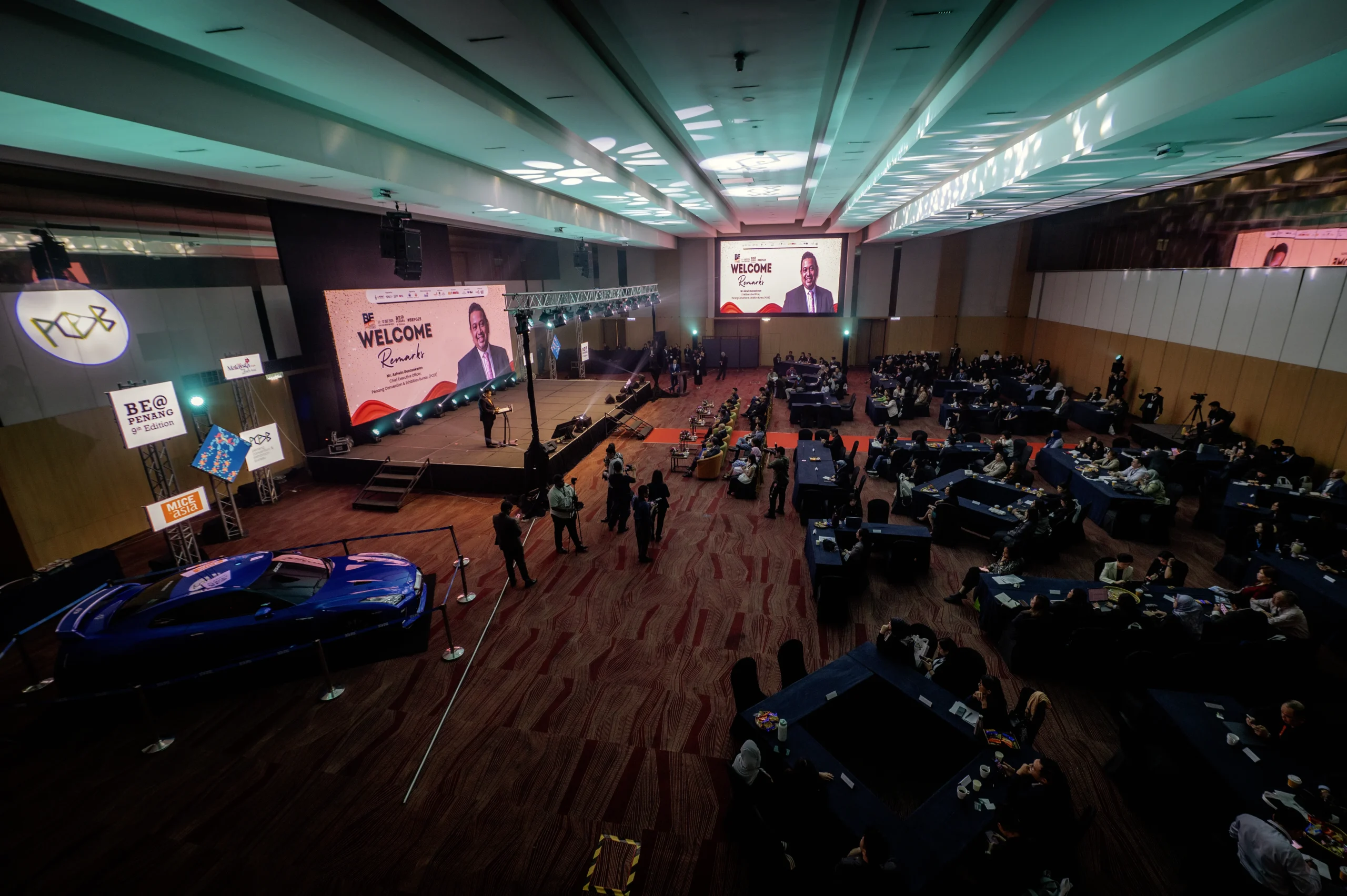
The ninth edition of BE @ Penang drew to a spectacular conclusion on Friday, 12th December, at the Setia SPICE Convention Centre in Pulau Pinang, Malaysia. The conference served as an excellent sounding board upon which a variety of game-changing ideas were presented to both currently-practising business events professionals and the next generation to poised to enter the industry within the next decade. Ranging from a need for greater inclusivity and accessibility when it comes to both events and event venues, to training a new generation of professionals for the industry, to a need to ensure the wellbeing of practitioners, there was much to think about with regard to the future of MICE and business events. As such, we at Travel Daily Media are grateful to the Penang Convention and Exhibitions Bureau (PCEB) for giving us a ringside seat, so to speak, for these presentations; it is both an honour and a privilege for us to share the insights we gained from them with you. Training is key both for the current generation and the next one We'd like to cite Adrian Praveen's talk on The Future of Tourism here: he spoke about how it is necessary for hotels and hoteliers to train up staff in terms of people skills to ensure total guest satisfaction. Unfortunately, most organisations see training as mere upskilling or putting their people through the paces of learning how to use new software as opposed to giving refresher courses on courtesy, customer service, and public relations. That said, Praveen's talk touched a chord among those of the academic community, both professors and students, in attendance: putting a greater emphasis on people skills in their education will lead to the development of industry professionals with greater empathy and a more sincere desire to serve others in their work. Training may also mean gaining a greater understanding of the differently abled and their specific needs; which brings us to... Accessibility is good for business Attending BE @ Penang gave us the opportunity to listen to the insights of Malaysian accessibility advocate Beatrice Leong who was the resource person / speaker for the fireside chat Accessibility: It is Good Business. Leong is, herself, on the autism spectrum but struggled through life as a proper diagnosis wasn't made until she was an adult. Today, she serves as a gender and accessibility advocate through her work as a documentary filmmaker, her non-profit organisation Autism Inclusiveness Direct Action Group, as well as the health technology startup Gather. At BE @ Penang, she remarked: "We live in a world that is built on businesses. But if businesses are not accessible, how can my community or even myself participate?" Leong pointed out the diverse nature of the very concept of disability which spans from the physical to the psycho-emotional: for events and event venues to become more inclusive is to take into consideration the specific needs of these people whether they are visually impaired, affected by mobility issues, or require quiet spaces in which they can take the time to collect themselves or prevent a panic attack. For this reason, measures like the quiet room offered at Setia SPICE for the conference make all the difference, enabling those who would not normally be able to join in to become a part of a major event. And, of course, more participants is always a good thing in the context of business events and MICE. Use technologies to your advantage BE @ Penang 2025 also featured the talk The AI-powered Future of Business Events helmed by best-selling South Korean author and tech evangelist Dr Bona Nahyun Lee, chief executive of business tech consultancy BornTiger. During her session, Lee pointed out that innovations like artificial intelligence can take the tedium of administrative work out of the hands of business events professionals, giving them more time to let their imagination run free to develop more unique ways of staging events for maximum impact. Lee's presentation also showed how events professionals can use AI beyond automating routine tasks, demonstrating its use in crafting event agendas, venue layouts, and even event playbooks that showrunners can use throughout the staging process. It's time to safeguard the mental and physical health of events professionals Let's be blunt about it: MICE, especially business events handling and management, is one of the most stressful industries in the world. A report from the South African organisation NGO Connects points out how MICE professionals worldwide often end up burnt out as there is great pressure to ensure high attendance numbers, economic impact, and returns on investment for organisers and sponsoring firms. Likewise, another report published by Bizzabo in 2023 lists event coordinators among the most stressful occupations of the current era, as many people in the profession sacrifice their own mental and physical health to ensure the desired outcomes. Neuropsychiatrist Dr Prem Kumar Chandrasekaran of the Penang Adventist Hospital decried the trend, sternly advising participants to safeguard both their mental and physical health by ensuring a proper work-life balance, learning how to say no if it means protecting themselves from unnecessary burnout, and knowing when to properly clock off from their responsibilities at a reasonable hour. Chandrasekaran further admonished event management companies to take proper care of their people by enabling them to avail of medical, psychological, and even spiritual assistance whenever necessary; after all, happy workers in the best of health deliver the best results. The future is collaborative One particular session we appreciated at BE @ Penang 2025 was the interactive session The Voice of Business Events: Co-creating Solutions for 2026 and Beyond. Guided by coach, facilitator, and tranor Daniel Gonzaga, the interactive session made participants get out of their seats as they huddled with peers to develop solutions for recruitment and talent retention, sustainability, and operations management within the business events sector that could be shared with others well after the end of the conference. The collaborative nature of the session served as a keen reminder that, business and professionalism notwithstanding, this is a sector that needs, even demands, collaboration to come up with fresh ideas to boost engagement, profitability, awareness of key issues, and greater understanding among industrial peers. The fact that it called for teamwork rather than competition was also notable: it helped participants see common ground with their peers, thereby enabling them to come up with mutually beneficial solutions that would help build a better MICE industry on national, regional, and even global levels in the long run.

Shiji’s Christine Lising shares insights on how technology is reshaping F&B operations
Shiji Group’s director of solutions engineering in the Americas Christine Lising recently shared her insights on how technology is reshaping food and beverage (F&B) operations in hotels, from mobility and AI to predictive analytics and automation. Lising highlighted the unique challenges of hotel F&B operations compared to standalone restaurants: multiple outlets, in-room dining, banquets, and PMS integrations demand flexible, intuitive POS systems. She explained: "The goal isn't to replace hospitality with technology: it’s to remove the operational noise that gets in the way." An evolution guided by insights As AI and data-driven platforms mature, Lising envisions a future where every F&B interaction is guided by real-time insights: anticipating guest preferences, optimizing menu choices, and enabling hyper-personalized experiences across every outlet. As she puts it, the balance of empathy and innovation is what will define the next generation of hospitality service. According to Lising: "Innovation is only successful when it's grounded in operational reality. We involve operators early, testing in real hotel environments, gathering feedback, and iterating quickly. In F&B, that means ensuring mobile ordering, kitchen routing, and integrations all work seamlessly together so staff can focus on delivering memorable guest experiences, not managing technology." Where does mobility come in? Mobility continues to reshape hotel dining experiences, giving teams the freedom to meet guests where they are. Mobile POS systems, integrated with PMS and CRM data, empower staff to take orders, process payments, and personalize service from anywhere on property. The result: faster service, more upselling opportunities, and a guest journey that feels seamless and personal from start to finish. From mobile ordering to cloud-based integrations, the future of F&B lies in connected, predictive systems that empower staff and enhance guest experiences. Lising concluded by saying: "Automation should create space for hospitality, not eliminate it."
Incredible Journeys empowers agents with insight and inspiration at inaugural Touring & Adventure Showcase
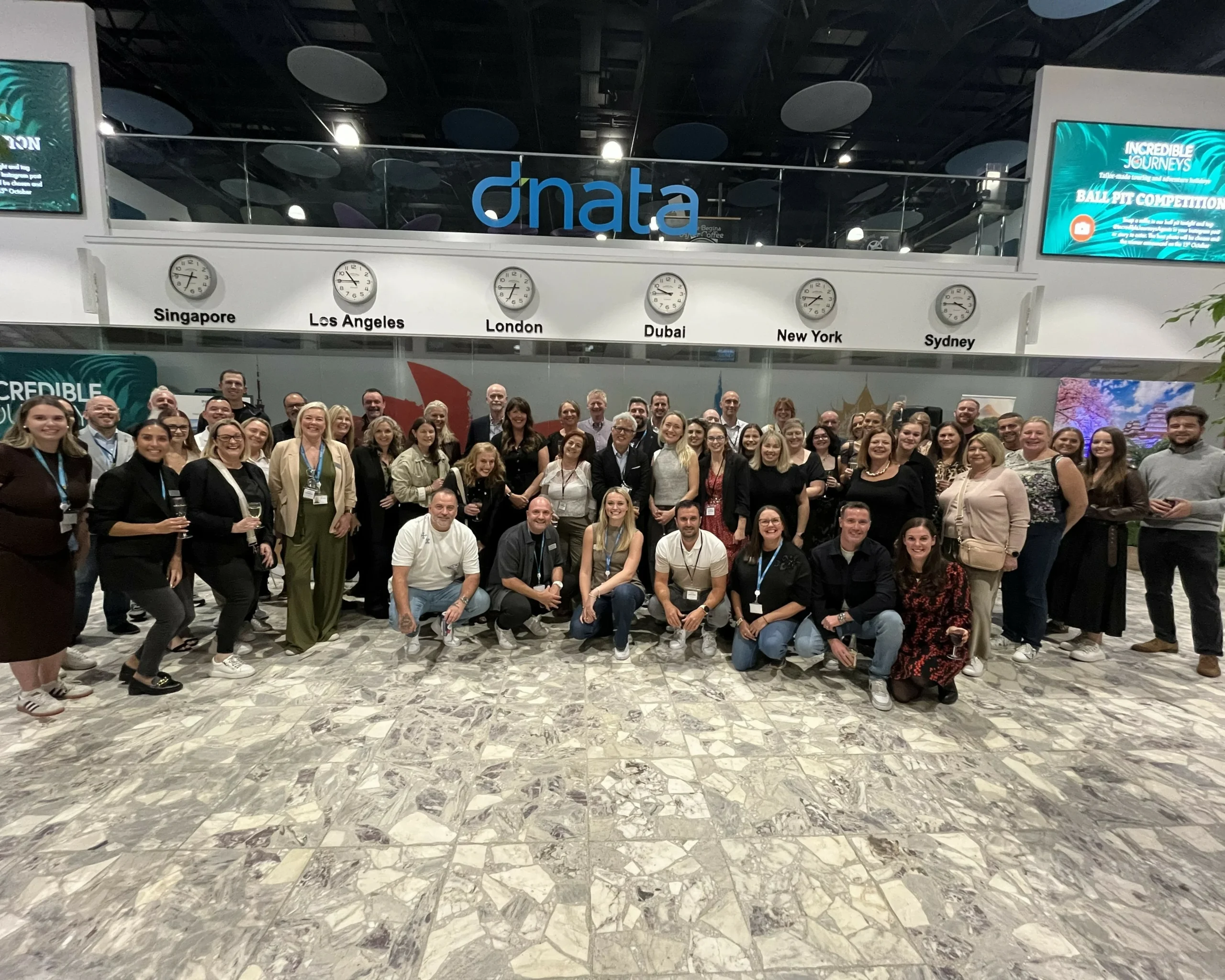
The B2B touring and adventure brand of dnata Travel Group UK have spent two days hosting over 35 agents and 15 partners at their head office in Leyland for their very first Touring and Adventure Showcase. Day one included an informative presentation to their supplier partners in attendance, before agents arrived and began speed-dating styled training sessions, learning about so many fascinating products available. Partners in attendance were G Adventures, Intrepid, APT, AAT Kings, Journey Beyond, Destination Asia, TTC, Cosmos, Globus, FollowMe2Africa, Just You, Wendy Wu Tours, Distinct Destinations, AE Expeditions and Aqua Expeditions. At the end of the first day, the Incredible Journeys team celebrated with their agents and suppliers at their evening event, which provided the perfect setting to network with each other, reflect on what they had learned throughout the day and come together to enjoy great food, drinks, music, and the addition of a branded ball pit. All agents who attended were also entered into a prize draw to win some exceptional prizes, including a FAM trip place on an Albania tour with Just You, and the grand prize from Incredible Journeys and G Adventures, which was a FAM trip place on their Thailand trip, travelling in 2026. On day two, agents were introduced to Claire Brighton, Director of Association of Touring & Adventure (ATAS), as she hosted an expert panel. On the panel was Incredible Journeys Managing Director and ATAS board member, Simon Applebaum; National Sales Manager from G Adventures, Stu Darnley; Senior Partnerships Manager from Intrepid, Kaigan Lewis; and Senior Business Development Manager from AE Expeditions, Katie Harbel. Creating an engaging and informative panel and answering questions that provided agents with insight into the latest trends and tips for selling holidays in this sector, agents left with a developed confidence for how to sell and promote even the most intricate of tours. Simon Applebaum, Managing Director shared, “This event was a great opportunity to connect with so many agents who were all keen to learn more about this ever-growing sector, and to of course welcome our valued supplier partners back to our HQ. The purpose of these two days was to encourage more agents to confidently sell touring holidays and to connect them with the people who can help them through every query and booking.” Applebaum continued, “We are grateful to our suppliers for supporting us at this event and for giving their time and expertise to our agents. And to our agents, who all made the most of their time with us, asking questions and being engaged throughout. This was our first touring and adventure showcase, but I expect it won’t be our last.”
OTA Insight
OTA Insight, Elm Street, Dallas, TX, USA USA

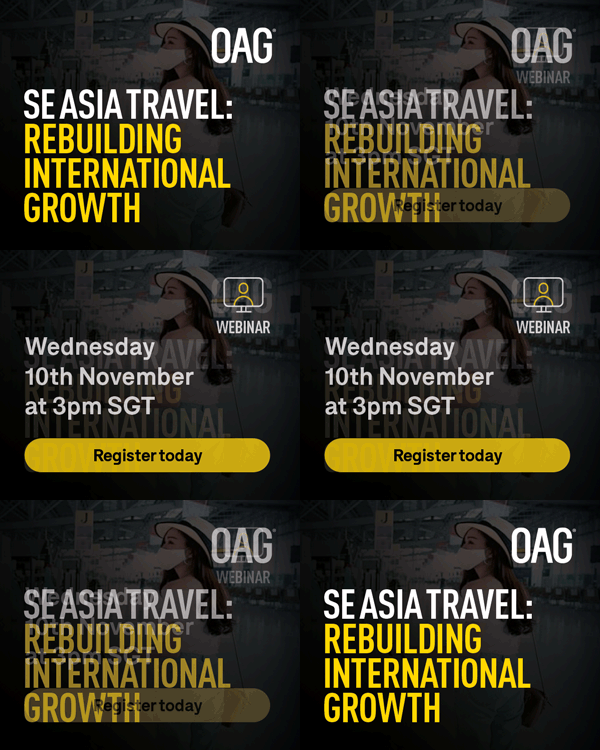
Webinar: Insight and analysis for the SE Asia region
Wednesday November 10th, 2021 @ 3PM SGT, Join our Chief Analyst, John Grant, Becca Rowland, Partner, Midas Aviation and our guest panelist Gary Bowerman, Director, Check-in Asia as they discuss: What impact the Delta variant has had in terms of pausing recovery v's other parts of the world? Vaccination rates and the degree to which this unlocks air travel, The current pace of recovery across SE Asia's main countries, Key source markets then and now Is quarantine free travel on the horizon yet, REGISTER TODAY!

Bali Villa Connect 2026
Bali Villa Connect 2026, organized by the Bali Villa Rental and Management Association (BVRMA), is the annual flagship event for Indonesia’s villa and short-term rental industry.

GSTC2026 Global Sustainable Tourism Conference
The GSTC2026 Global Sustainable Tourism Conference will bring together sustainability leaders, tourism professionals, and industry stakeholders from around the world.

Destination Deluxe Awards and Wellness Summit 2026
DESTINATION DELUXE AWARDS & WELLNESS SUMMIT 2026 22-23 September 2026 Four Seasons Hotel Bangkok The Destination Deluxe Awards & Wellness Summit is

Macao International Travel Industry Expo (MITE) 2026
The Macao International Travel (Industry) Expo (MITE), organized by the Macao Government Tourism Office (MGTO), is the only professional

Thailand Tourism Forum (TTF) 2026 – 15th Annual Edition
Thailand Tourism Forum 2026 15th Annual Edition Join us for the 2026 Thailand Tourism Forum! Celebrating 15 years as Thailand’s

Thailand MICE X-Change 2026
Thailand MICE X-Change 2026 Date: 29-30 April 2026 Venue: QSNCC, Bangkok, Thailand Time: 10.00 – 18.00 Hrs. Event Objective: Act as a catalyst

MTE HCMC 2026
MTE HCMC 2026 31 March – Vinpearl Landmark 81, Autograph Collection MTE HCMC 2026 aims to foster connections, create collaboration

AHICE Far East Asia 2026
PRESENTING AHICE Far East Asia Wednesday 2 & Thursday 3 September 2026 Grand Prince Hotel Takanawa, Tokyo, Japan The Asia

AHICE Asia Pacific 2026
AHICE Asia Pacific 2026 Wednesday 6 – Thursday 7 May 2026 Adelaide Oval, South Australia In 2025, the 16th edition

5th Hospitality Japan Conference #HJC2026
5th Hospitality Japan Conference 2026 Redefining Hospitality: Strategic Insights Beyond Borders in Japan October 7-8, 2026 • The Capitol

6th Hospitality Malaysia Conference #HMC2026
6th Hospitality Malaysia Conference 2026 Join us in Redefining Hospitality in Malaysia, Going Beyond Traditional Boundaries! June 24, 2026 •

9th Hospitality Indonesia Conference #HIC2026
9th Hospitality Indonesia Conference #HIC2026 Indonesia’s Leading Event for Hospitality and Tourism February 10-11, 2026 | Le Meridien Jakarta From Vision

Short Term Rentals Asia 2026 – Bangkok, Thailand
Gather – Connect – Grow 11-12 February 2026 – Bangkok 2026 – The Venue – Holiday Inn Sukhumvit 22 This summit

China International MICE Exchange (CIMX) 2026 – Beijing, China
What is CIMX? The China International MICE Exchange (CIMX) is the premier platform for China‘s events, meetings, and incentive

TDM Global Summit Singapore – 2026
An exclusive invitation-only gathering of 200+ C-Suite travel and hospitality executives. Join us on Nov 25 at the Amari Bangkok for high-impact networking, strategic insights, and discussions on the future of travel tech and regional growth. Shape the industry’s tomorrow.

Sustainable Action Conference 2025
Building on the success of the 2nd edition of the Sustainable Action Conference (SAC 2024), we are proud to
ITE Hong Kong and MICE Travel Expo 2026
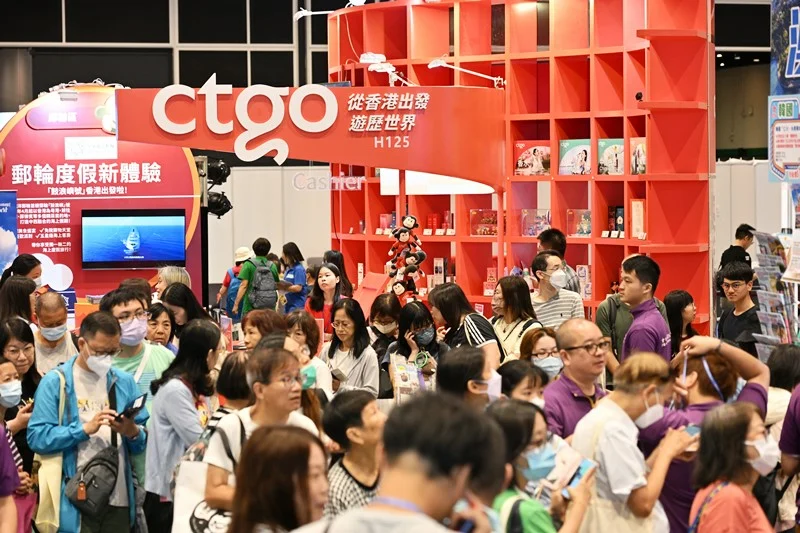
ITE Hong Kong 2026 – The 40th International Travel Expo co-locating with the 21st MICE Travel Expo Great Shopping

TDM Global Summit Bangkok – 2026
Join 400+ of the industry’s most influential C-Suite executives, owners, and innovators for an exclusive, invitation-only day of strategic insight.

MTE Hanoi 2025 – Unlocking Opportunities in Vietnam’s Hospitality & Real Estate
Join MTE Hanoi As Vietnam’s Booming Development Pipeline Opens New Opportunities - Meet The Nation’s Key Developers And Industry Leaders At The Premier Hospitality And Real Estate Conference.