

Search Results forBali

HBX Group gets UNLOCKED in Bali for MarketHub Asia 2026
Global B2b travel technology marketplace HBX Group kicks off MarketHub Asia 2026 today, 4th February, in Bali, Indonesia. The two-day event which runs till tomorrow, 5th February, revolves around the theme UNLOCKED; as previously reported, this refers to the rapidly evolving state of travel and technology in the near future. MarketHub Asia brings together senior decision-makers from across distribution, hospitality, technology and data for two days of discussion focused on how the travel industry continues to evolve and what leaders need to do next. As HBX Group’s chief distribution officer David Amsellem puts it:: “MarketHub Asia is where the real conversations happen. This is the forum where we cut through the noise and focus on what matters: the seismic shifts reshaping travel and how we capitalise on them together. Asia isn't following anymore; it's leading. This edition brings partners together to tackle the opportunities we're all chasing and the challenges no one's cracked yet.” HBX chief sourcing and operations officer Xabier Zabala added: “From supply and demand dynamics to the role of technology and collaboration, MarketHub Asia is designed around practical conversations. It’s about how the industry works together to deliver better outcomes for partners and travellers.” Who’s on the 2026 slate? The programme opens with HBX Group chief finance officer Brendan Brennan’s talk on the forces reshaping travel technology today, from the growing impact of artificial intelligence to the changing expectations of travellers and partners. HBX chief information officer Daniel Nordholm will be on hand to direct the conversation towards innovation and product development as he unveils a series of new products whilst explaining what the Group is currently building, the challenges these solutions are designed to address, and how they support the next phase of HBX Group’s ecosystem. With the event’s strong focus on data and insight, Tourism Economics’ head of tourism analysis in the Asia Pacific Michael Shoory will provide attendees with a macroeconomic outlook of the region. ForwardKeys intelligence and marketing director Olivier Ponti, on the other hand, will share data-led insights into travel demand and performance. Concepts from beyond the traditional travel sector will also feature across the programme, including a keynote by John Sanei, a globally recognised futurist and business strategist, alongside cross-industry panels bringing together leaders from distribution, retail and hospitality. These perspectives will feed into on-stage discussions with industry leaders on how travel businesses can respond to shifting market dynamics and translate insight into action.

Virgin Australia Launches First International Flights from Canberra with New Bali Route
Virgin Australia is set to make history in 2026, launching its first‑ever international service from Canberra with new direct flights to Bali starting 22 June 2026. The move will see the airline become the only Australia‑based carrier operating international flights out of the nation’s capital – and the only airline flying the Canberra–Bali route. Canberra Gets Its First Virgin Australia International Route From June 2026, Virgin Australia will connect Canberra directly with Denpasar, Bali, adding more than 40,000 seats each year between the ACT and Australia’s favourite overseas holiday hotspot. The route will operate seasonally from April to January with three return services per week, with scope to increase frequencies during peak school holiday and winter escape periods. Flights are on sale from 10am AEDT with return fares starting from $399 in Economy Lite, $499 in Economy Choice and $1,449 in Business, giving Canberrans a competitively priced, time‑saving alternative to driving to Sydney or connecting via other cities. Convenient Schedule Designed for Holidaymakers The new service has been structured around maximising holiday time in both directions. Services will depart Canberra in the afternoon, allowing travellers to work a half‑day or connect seamlessly from regional flights before boarding. Return flights will operate overnight from Bali, giving guests a final full day on the island before arriving back in the capital the following morning. This schedule is designed to appeal to families, couples and long‑weekend escapees looking to make the most of limited annual leave, while also suiting government and business travellers who need efficient access to Indonesia. What to Expect Onboard: 737 Comfort and Choice Virgin Australia will operate Boeing 737‑800 aircraft on the Canberra–Bali route, offering three seating choices: Business, Economy and Economy X. Economy X delivers extra legroom plus priority boarding, giving leisure travellers a more comfortable option on the six‑plus‑hour flight without stepping up to Business. Onboard, guests can expect Virgin Australia’s relaxed, friendly service, a buy‑on‑board food and beverage offering, and the ability to earn and redeem Velocity Frequent Flyer points and Status Credits on the new route. A Major Win for Canberra’s Connectivity This new route is a significant win for the ACT and a major milestone in Virgin Australia’s broader network expansion, marking the first time the airline has operated international flights from the nation’s capital and firmly positioning Canberra as more than just a domestic hub. Bali remains one of Australia’s most popular overseas holiday destinations, with strong, long-standing demand from Canberra and the surrounding region, and the new flights launch alongside an upgrade of Virgin Australia’s Brisbane–Canberra services from Alliance-operated F100 jets to Virgin’s own 737s, further boosting capacity into the capital. Part of a Growing Australia–Bali Network The Canberra–Bali flights will complement Virgin Australia’s existing direct Bali services from Melbourne, Sydney, Brisbane and the Gold Coast, creating a broader network of options for Australian travellers heading to Indonesia. Same-day domestic connections into and out of Canberra will also make it easier for travellers from other cities to route via the capital if it offers better timings or fares. With Indonesia now rivalling New Zealand as one of Australia’s top overseas destinations and Virgin Australia already carrying more than half a million guests a year between Australia and Bali, the new Canberra route arrives at a time of record demand. For Canberrans and regional travellers alike, Bali just became a whole lot closer.

Bali rethinks strategies as it combats impact of overtourism
Pre- and post-pandemic, it’s not surprising to know that the Indonesian island paradise that is Bali remains one of the world’s most desirable and most visited destinations. As of November 2025, the province’s I Gusti Ngurah Rai International Airport welcomed a staggering 4.8 million foreign arrivals, with Australian and Indian travellers leading the pack. In terms of economics, this is a major boon for Bali, given how the tourism sector contributes up to 70 percent of its gross domestic product (GDP) and hires 25 percent of the island’s total workforce. However, such a boom does not necessarily mean that tourism is a purely good thing for Bali and its people; on the contrary, tourism, especially in the context of overtourism, is also the biggest thorn in its side. The downside of mass tourism For Bali, tourism and the industrialisation that comes with it have all but sounded a death-knell for its native culture and traditions. In its country report on Bali, Responsible Travel’s experts pointed out that, while overtourism affects everyone, locals bear the brunt of its impact even after guests have long gone. While the blatant disrespect of foreigners to the people and their culture is galling enough, the Balinese have also needed to deal with overdevelopment, the depletion of key resources such as groundwater, rampant pollution, as well as traffic congestion at almost all hours of the day. In fact, the issue of overtourism in Bali actually isn’t new; in August 2012, the French newspaper Le Monde published a piece decrying the way mass tourism was destroying the island paradise. At the time, I Wayan Suardana of the Indonesian environmental protection organisation Wahana Lingkungan Hidup Indonesia (WALHI) mourned the fact that the measures meant to boost cultural tourism in the province have led to its own downfall at the hands of the foreign visitors it sought to draw in. Suardana remarked: “Bali really became a tourist destination in the 1970s. But in the beginning, it was mostly cultural tourism. Today, we are witnessing mass tourism, and that's the very problem!” The environmental advocate was actually reported to the authorities in 2016 for protesting the Benoa Bay Reclamation Plan which would have turned what is essentially a marine conservation area into a luxury hospitality enclave which would not have only ruined the area’s ecological balance, but would also squander a major part of the island’s freshwater reserves for the exclusive use of their guests. But while WALHI successfully prevented the reclamation of Benoa Bay, it remains unsuccessful in curbing the rezoning of agricultural land into hospitality and leisure areas for foreign guests, and locals are losing up to 700 hectares of land per year to commercialisation. Cultural erosion Blatant disrespect of local culture and traditions is another issue that authorities are struggling to address, much to the ire of the native Hindu population which has long chafed under Indonesia’s Muslim majority. It also hasn’t helped that many western visitors who come to Bali have this anything goes mindset, the one where anything that happens abroad, stays abroad. But in these days when social media is king, their shenanigans are broadcast across platforms, exposing their boorish behaviour to the rest of the world. As the experts at Responsible Tourism put it: “A sense of entitlement has emerged among some visitors, not helped by a rise in social media influencers creating an image of the island that doesn’t stand up to reality. This points to a perception that Bali is a place where ‘anything goes’, which is entirely at odds with the respect for others that is embedded within traditional culture here.” While this has resulted in stricter guidelines regarding public propriety, sobriety, and decorum in sacred sites, authorities still struggle to curb unruly and often openly disrespectful behaviour among foreigners. The commercialisation and commodification of culture and cultural icons has also proven to be more of a bane than a boon to Bali, as some of its most iconic traditions are dismissed as “charming” local quirks and shoddy souvenirs. Navigating the uphill climb The road to recovery of any sort is never an easy thing, more so for Bali as it tries to navigate itself out of the rut dug deep by overtourism. Nevertheless, this Indonesian province has been working to alleviate if not completely eradicate the issue through the implementation of new laws and measures regulating tourism, sustainability, and public behaviour. Since the end of the pandemic, these have included: Greater tourist levies and stricter visa control Bali has been charging a mandatory tourist levy of around US$4 since February 2024. Revenues collected from the levy are allocated to initiatives related to environmental protection and cultural preservation. Indonesian authorities are also looking into revising existing laws and regulations for long-term visas for foreigners; A moratorium on development and construction Construction initiatives related to hospitality and leisure development, particularly in the strained region of South Bali, have been suspended or scrapped all together as of September 2024. As of press time, the Indonesian government has not rescinded the moratorium which some officials say could remain in place for up to ten years; Harsher punishment for misbehaviour Arrests and fines are one thing, but foreigners need to be more careful when in Bali as deportation awaits those caught in the acts of public indecency, disrespect to local cultural or religious sites, being under the influence, and even traffic violations; Revamped waste management Per a report from National Geographic, local authorities are working to properly dispose of the almost 33,000 tonnes of single-use plastic waste tossed into Bali’s surrounding waters. Measures are also being made to ensure an ample supply of freshwater for the local population; Transportation-centric infrastructure Authorities are likewise finding solutions to decongest roads, including urban railways as well as those connecting Bali to the rest of the Indonesian archipelago; and The promotion of secondary destinations On the part of the national government, tourism authorities are shifting the attention from congested areas like Bali and Jakarta to lesser-known but equally appealing areas like Yogyakarta, Labuan Bajo, and Bandung, infusing these locations with ample financing for tourism-related infrastructure. Admittedly, the overtourism issue in Bali will not disappear overnight; but the Balinese want visitors to know that it is still their island, their homeland. As one local entrepreneur put it: “Our hospitality has been taken for granted. If you wouldn’t do certain things in your own country, don’t do it in Bali. Don’t blame us if we take action, don’t blame us if we speak up, don’t blame us if we stand up and tell you it has to stop.”

New appointments announced at W Bali-Seminyak
W Bali – Seminyak announces a series of strategic leadership appointments as the resort prepares to enter its next chapter of evolution. Strengthening its executive team across operations and culinary, the resort welcomes Michael Clark as director of operations; Steven Peter as executive assistant manager for food, beverage, and culinary; and Jules Winckler as executive sous chef W Bali - Seminyak general manager Subin Dharman said of the new appointees: “Michael, Steven, and Jules each bring a distinct perspective and depth of experience that strengthens our leadership team at a pivotal moment. Their combined expertise across operations and culinary allows us to continue evolving while staying true to the spirit of W Bali – Seminyak.” With this strengthened leadership team in place, W Bali – Seminyak moves confidently into its next phase, with a focus on thoughtful transformation across operations, food and beverage, and guest experience. These appointments signal the resort's continued commitment to innovation and relevance, ensuring it remains one of Bali's most dynamic lifestyle destinations. Three come on board Michael Clark Leading the resort's operational vision, Michael Clark joins W Bali – Seminyak with an extensive track record within the W Hotels portfolio. Most recently Director of Operations at W Edinburgh, Michael previously held senior leadership roles as Director of Beverage & Food at W Barcelona and W Ibiza. With a hands-on leadership style and strong commercial insight, he brings a deep understanding of the W brand's service culture. In his new role, Michael will oversee day-to-day operations, driving performance, consistency, and a seamless guest journey across the resort. Steven Peter Joining the executive team as Executive Assistant Manager – B&F and Culinary, Steven Peter brings deep expertise in food and beverage strategy and culinary leadership. Most recently, he served as Director of Food & Beverage at Bangkok Marriott Marquis Queen's Park, overseeing large-scale, multi-outlet dining operations. His career also includes Executive Chef positions at JW Marriott Hanoi and JW Marriott Marquis Doha, as well as senior leadership roles with The Ritz-Carlton Hotel Company and Marriott International, where he served as Corporate Director of Culinary. With a strong foundation across both kitchen and executive leadership, Steven will play a central role in shaping W Bali – Seminyak's food and beverage direction while strengthening operational alignment across the resort. Jules Winckler Completing the leadership appointments, Jules Winckler joins W Bali – Seminyak as Executive Sous Chef, returning to the resort after previously working with the team as a Culinary Consultant. Trained in Paris with a foundation in pastry, Jules refined his craft at renowned institutions including Pâtisserie Christophe Michalak, Des Gâteaux et du Pain (by Claire Damon), and Hôtel du Palais, a Hyatt Hotel. His career later evolved into progressive leadership roles as Head Chef at Nasther Paris and Executive Chef with Sunset Hospitality Group across Bali and Dubai. Jules brings a contemporary, detail-driven culinary approach that balances technical precision with creativity, supporting the continued evolution of the resort's dining experiences.

Bali eyes proof-of-funds rules as overtourism bites
According to multiple media reports, the provincial government of Bali, Indonesia, is reviewing a new regulation that would require foreign tourists to disclose their bank account balances over the past three months and submit a detailed itinerary, including expected length of stay and travel plans. The measure has been written into a draft Regulation on High-Quality Tourism Management and is currently under review by the provincial legislature. Data show that Bali received 6.333 million foreign visitors in 2024, up 20.10% year on year. Among them, Chinese tourists accounted for approximately 448,000 visits, a surge of 60.10% compared with the previous year. In sheer numbers, Chinese tourists are returning. But in practical terms, the proposed rule could affect Chinese travelers more directly. Industry insiders note that most Chinese citizens travel to Bali on visa-on-arrival, a relatively streamlined process. Precisely because of that, any added screening requirements would first put pressure on frontline airport operations. Even if the final rate of entry refusal remains low, the mere possibility of being randomly checked could be enough to reshape travelers’ expectations and behavior. The real issue, perhaps, is not the number of tourists, but the fact that Bali’s carrying capacity has been pushed to its limits. In 2024, around 29 million tourists poured into Bali—nearly seven times the island’s resident population. Yet this staggering influx has not translated into the economic gains policymakers had hoped for. Economic growth on the island slowed from 5.7% in 2023 to 5.5%, while average spending by international visitors declined. One key reason is that Chinese tourists—often seen as the highest-spending group—have only recovered to about one-third of their pre-pandemic numbers. Filling the gap instead are more budget-conscious travelers who stay longer and place greater strain on public resources, including long-term “digital nomads” and backpackers chasing ultra-low costs. From a policymaker’s perspective, terms like proof of funds, travel itineraries, and “high-quality tourism” point to an ideal visitor profile: stays that are limited in duration, financially secure, behaviorally predictable, and easier to manage.
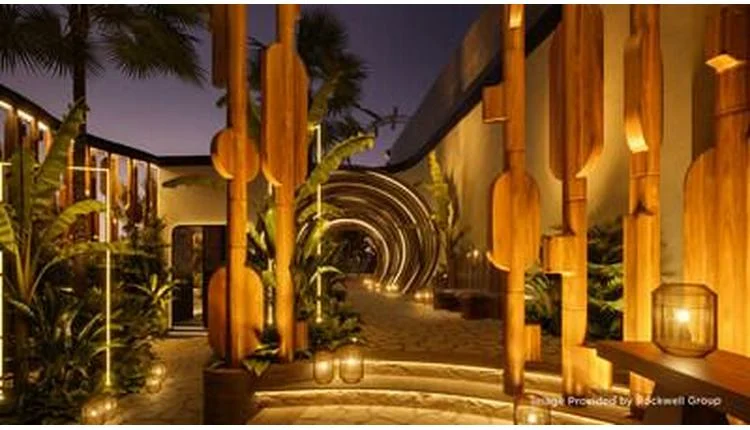
Savaya Group unveils Zumana on Bali’s Kuta Beach
Savaya Group, in collaboration with Indonesian hospitality developer KAJA Group, has announced the launch of Zumana, a new beachfront destination on Bali's renowned Kuta Beach. Set to open in 2026, Zumana aims to redefine the area with its innovative approach to hospitality, blending music, architecture, and social interaction in a setting framed by Bali's legendary sunsets. Designed by the acclaimed Rockwell Group, the 35,000-square-foot venue will feature a beachfront daylife experience and a 200-seat restaurant, allowing guests to transition seamlessly from daytime relaxation to evening dining and nightlife. This project marks a significant step in reintroducing Kuta as a contemporary hospitality hub, offering a fresh perspective on a location that once epitomised Bali's global allure. A significant development Alex Cordova, CEO of Savaya Group, highlighted the project's significance, stating, "Building on the global success of Savaya, this project underscores our long-term commitment to Bali as a destination with both a distinct identity and global relevance." He emphasised the group's focus on creating experiences that resonate internationally and contribute to Bali's enduring appeal. Nadia Tjahyadikarta, Managing Director of KAJA Group, expressed pride in the collaboration, noting, "This project represents a destination conceived from the ground up to express a distinct point of view." She added that the partnership with Savaya Group aims to set a new benchmark for Indonesia and Southeast Asia. Zumana's opening is poised to further cement Bali's status as a leading global destination for lifestyle, culture, and hospitality. ```
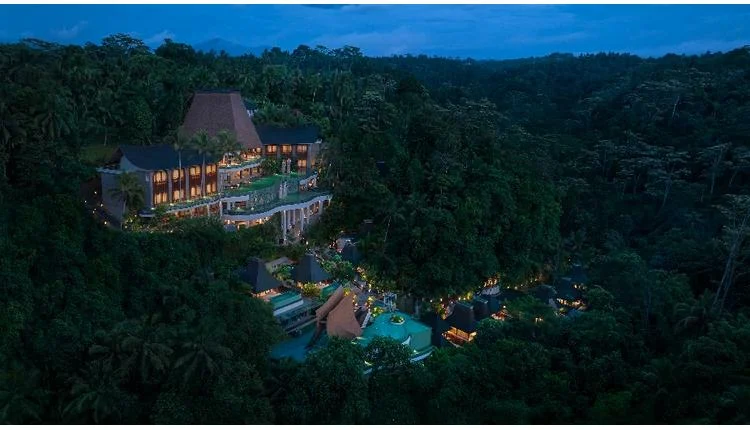
Tribute Portfolio opens Hiliwatu resort in Bali
Tribute Portfolio, part of Marriott Bonvoy's extensive hotel collection, has launched Hiliwatu, Bali Ubud, a Tribute Portfolio Resort, inviting guests to experience the serene beauty of Ubud, Indonesia. The resort, located in the hillside village of Bresela, spans 26,000 square metres and is designed to reflect Bali's artistic and natural heritage. Hiliwatu offers 38 accommodations, including suite rooms and villas, each designed to harmonise with Ubud's natural landscape. The resort features a 24-metre-high lobby with cascading water pools, a wedding chapel, and dining venues, all crafted to embody Bali's spiritual balance. "I am proud to announce the opening of Hiliwatu, Bali Ubud, a Tribute Portfolio Resort. This marks another important chapter for the brand in Indonesia," said Ramesh Jackson, Regional Vice President, Indonesia and Malaysia, Marriott International. A taste of excellence The resort's culinary offerings include Tapis, which highlights local Balinese cuisine, and Nira, a venue combining Balinese and Mediterranean flavours. Omber, the signature restaurant, offers a Mediterranean grill and steakhouse experience. Samya Wellness provides treatments inspired by local elements, promoting a holistic approach to wellbeing. Hiliwatu is committed to sustainability and community engagement, offering guests cultural experiences and supporting local agriculture. The resort is part of Marriott Bonvoy, allowing members to earn and redeem points. General Manager Yudi Hendarsyah stated, "Hiliwatu is a resort born from awe for nature, for craftsmanship, and for connection." The resort aims to offer a unique and immersive experience for travellers seeking a deeper connection with Bali's culture and environment. ```
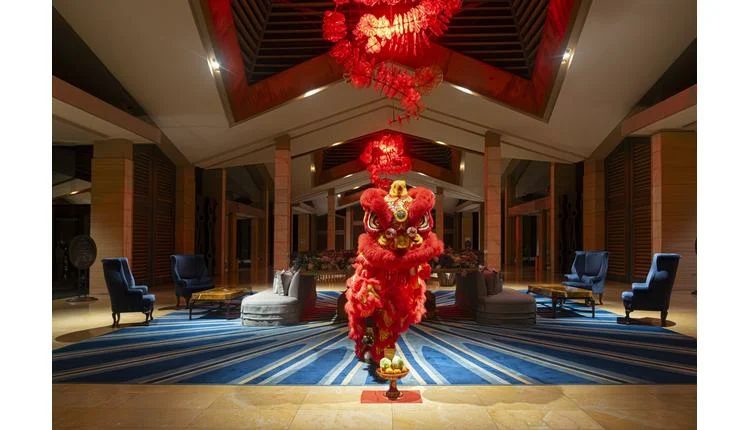
Mulia Bali celebrates Chinese New Year 2026 with tradition
The Mulia, Mulia Resort & Villas in Nusa Dua, Bali, is set to celebrate Chinese New Year 2026 with a series of events that honour tradition and cultural heritage. The festivities, which coincide with the Year of the Fire Horse, will include activities such as Chinese calligraphy, Hanfu photo opportunities, and a Lion Dance, all designed to provide guests with meaningful experiences. On 16 February, Chinese New Year’s Eve, guests can engage in the art of Chinese calligraphy from 6:00 pm to 9:00 pm in the Cannelé outdoor area. This practice allows participants to explore the symbolism behind each character, often representing wishes for harmony and prosperity. The event is informal, encouraging guests to appreciate the craft at their leisure. The celebration continues with Hanfu photo moments available on both New Year’s Eve and New Year’s Day, 17 February, where guests can don traditional Chinese attire, capturing memories that connect them to the cultural significance of the garments. Ushering in good fortune On Lunar New Year’s Day, the Lion Dance will be performed across select restaurants and the lobby area; this traditional dance is intended to usher in positive energy and new beginnings, seamlessly integrating into the resort's daily flow. Culinary experiences at Mulia Bali will feature festive dining at Table8, where specially curated menus highlight classic flavours associated with the New Year. Additionally, Chinese New Year hampers and holiday offerings will be available, reflecting themes of abundance and generosity. The Mulia Bali's approach to Chinese New Year is characterised by balance and respect, allowing guests to engage with the celebrations at their own pace, ensuring a tranquil yet festive atmosphere. ```

The Ritz-Carlton Bali celebrates Lunar New Year
The Ritz-Carlton Bali is set to welcome guests for the Lunar New Year with a series of curated dining experiences designed to foster family togetherness and celebrate the Year of the Horse. The resort will host a Lunar New Year's Eve Dinner and an Afternoon Tea, each crafted to blend traditional customs with modern elegance. Guests can enjoy the Lunar New Year's Eve Dinner at Senses, featuring a buffet of freshly steamed dim sum, golden spring rolls, roast duck, and wok-fried specialities. The dinner, which includes live carving stations and festive desserts, will take place on 16 February 2026, from 6 pm to 10:30 pm, priced at $65 (IDR 1,000,000) per person. For a more relaxed celebration, the Lunar New Year Afternoon Tea offers a selection of sweet and savoury treats, such as mandarin orange cake and crispy vegetable money bags. This experience, available from 15 to 20 February 2026, is priced at $72 (IDR 1,100,000) for two people and includes premium loose-leaf teas with ocean views. "We are delighted to welcome guests to The Ritz-Carlton Bali for this meaningful celebration of the Lunar New Year," said Go Kondo, General Manager of The Ritz-Carlton Bali. "Our culinary teams have thoughtfully crafted experiences that honour cherished traditions whilst showcasing the richness of Asian flavours." The Ritz-Carlton Bali, known for its Indo-Balinese hospitality, offers 313 oceanfront suites and villas, five dining venues, and a spa, providing a luxurious setting for guests to enjoy the festive season. ```

Cross Hotels & Resorts unveils new Bali resort
Cross Hotels & Resorts has announced the signing of Cross Bali Uluwatu, a new upper-upscale resort located just 200 metres from Bali's iconic Suluban Beach. Developed in partnership with PT The Cube Group, this venture marks a significant step in Cross Hotels & Resorts' expansion across Indonesia, focusing on destinations that blend design, culture, and commercial success. The resort, featuring 120 keys, is designed to offer expansive ocean and sunset views, embodying a commitment to long-term value creation. Jihong An, Executive Director of Cross Hotels & Resorts, highlighted the importance of Uluwatu as a destination, stating, “Uluwatu is one of Bali’s most compelling destinations, and Cross Bali Uluwatu embodies exactly what our growth strategy stands for; meaningful sites, strong partnerships, and design with purpose.” PT The Cube Group, known for its innovative approach to real estate and hospitality, aims to create a destination that honours the local landscape and culture. Dauren Nurgaliev, Director & Co-Founder of PT The Cube Group, remarked, “We are driven by the belief that exceptional destinations are born from purpose and place.” Evan Burns, Country Manager for Indonesia at Cross Hotels & Resorts, added that the resort is a testament to their 'Luxury by Design' philosophy, ensuring that every aspect of the guest experience is thoughtfully crafted. This development further cements Cross Hotels & Resorts' position as a key player in Indonesia's hospitality sector, with plans to expand its portfolio across the Asia-Pacific region by 2029. ```

Intercontinental Bali Resort
InterContinental Bali Resort, an IHG Hotel, Uluwatu Street, Jimbaran, Badung Regency, Bali, Indonesia Bali, Indonesia

Bali Zero
Kabupaten Badung


Need a change of pace? Would 3 nights in Bali or Thailand interest you? answer 1 simple question and ENTER NOW!
In partnership with TD, Discova is offering everyone the opportunity to win 1 of 2 amazing prizes, including a 3-night stay at Away Bali Legian Camakila and a 3-night stay at Cross Vibe Bangkok Sukhumvit Hotel.. dont miss out on this chance to relax and unwind

Ready to unwind with two nights in a Junior Suite at Renaissance Bali Uluwatu Resort & Spa
In partnership with TD, Renaissance Bali Uluwatu Resort & Spa was giving you the opportunity to win two nights in a Junior Suite including breakfast for two, all by answering one easy question, are you the winner!

Winners of the Holiday Villa Hotel Langkawi, Wina Kuta Holiday Villa Bali and Holiday Villa Pantai Indah Bintan have been announced!
Situated just a ferry ride away from Singapore or Johor Bahru in Malaysia, as well as its neighboring Batam Island, Bintan is the largest island in the Riau Islands province and one that offers the perfect getaway with its high-end resorts, world-class golf courses, and refreshing coastal atmosphere.

Did you win a 2 night stay in a Deluxe Room at Radisson Blu Bali!
Radisson Blu Bali Uluwatu, home to stunning coral reefs, golden beaches and impressive volcanic mountains, the Indonesian island of Bali also known as the "Island of the Gods," invites you to explore its natural beauty and cultural heritage. The Radisson Blu Bali Uluwatu is perched overlooking the Indian Ocean and local farmland, giving you amazing views from each of our spacious hotel rooms and suites. Our convenient location places guests close to Bingin Beach and Padang Padang Beach, home of the world-famous Rip Curl Cup Invitational surfing competition. Whether your day is spent by the pool or on the beach sunbathing, wave surfing, sightseeing or shopping, you can find relaxation at the end of the day at the Radisson Blu.

Digital Travel APAC Singapore – 12-13 August
The Premier Gathering for Digital Innovators from APAC's Top Airlines, Hotels, OTAs and more